POWERING RENEWABLE ENERGY PROJECTS AT SCALE
NetSuite for Renewables:
Connect opportunities, supply chains, project delivery and financial performance in one platform.
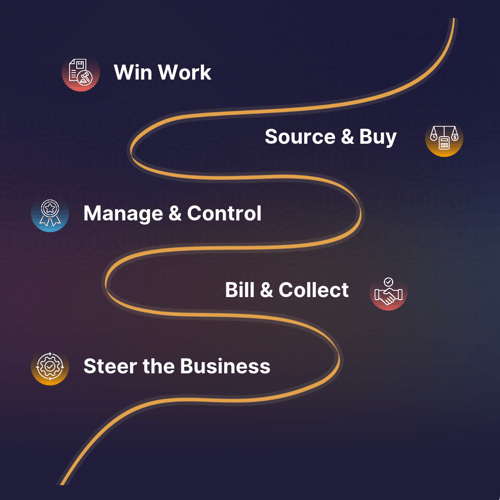
Renewable energy businesses need visibility across development pipelines, procurement, project delivery and financial performance. Built natively within NetSuite, ProScope connects every stage of the renewable energy lifecycle through five connected workbenches, giving developers, EPC contractors and asset owners one golden thread of information from opportunity through to operation.
.png?width=500&height=500&name=Hero%20image%203%20(2).png)
Why Renewables Businesses Choose ProScope
Renewable energy projects are becoming increasingly complex. Developers, EPC contractors and asset owners need to coordinate opportunities, equipment procurement, delivery teams, financial performance and stakeholder reporting, often across multiple projects, entities and locations.
Unlike disconnected project systems, ProScope extends NetSuite for Renewables through a single connected data model, creating one environment for development, delivery and finance teams. Every estimate, commitment, project update, invoice and forecast is connected to the same underlying project and financial data.
The result is greater control, stronger visibility and a connected foundation for sustainable growth.
One platform. One golden thread. Complete Visibility Across the Renewable Energy Lifecycle.
Win Work
Prioritise Better Opportunities and Build More Competitive Bids
Assess opportunities earlier, improve bid decisions and create a stronger foundation for project delivery.
From early-stage development through to EPC tendering, renewable energy businesses need visibility across technical, commercial and operational factors before committing valuable time and resources. Grid availability, land constraints, planning requirements, equipment availability and long-term project economics all play a critical role in determining whether an opportunity is worth pursuing.
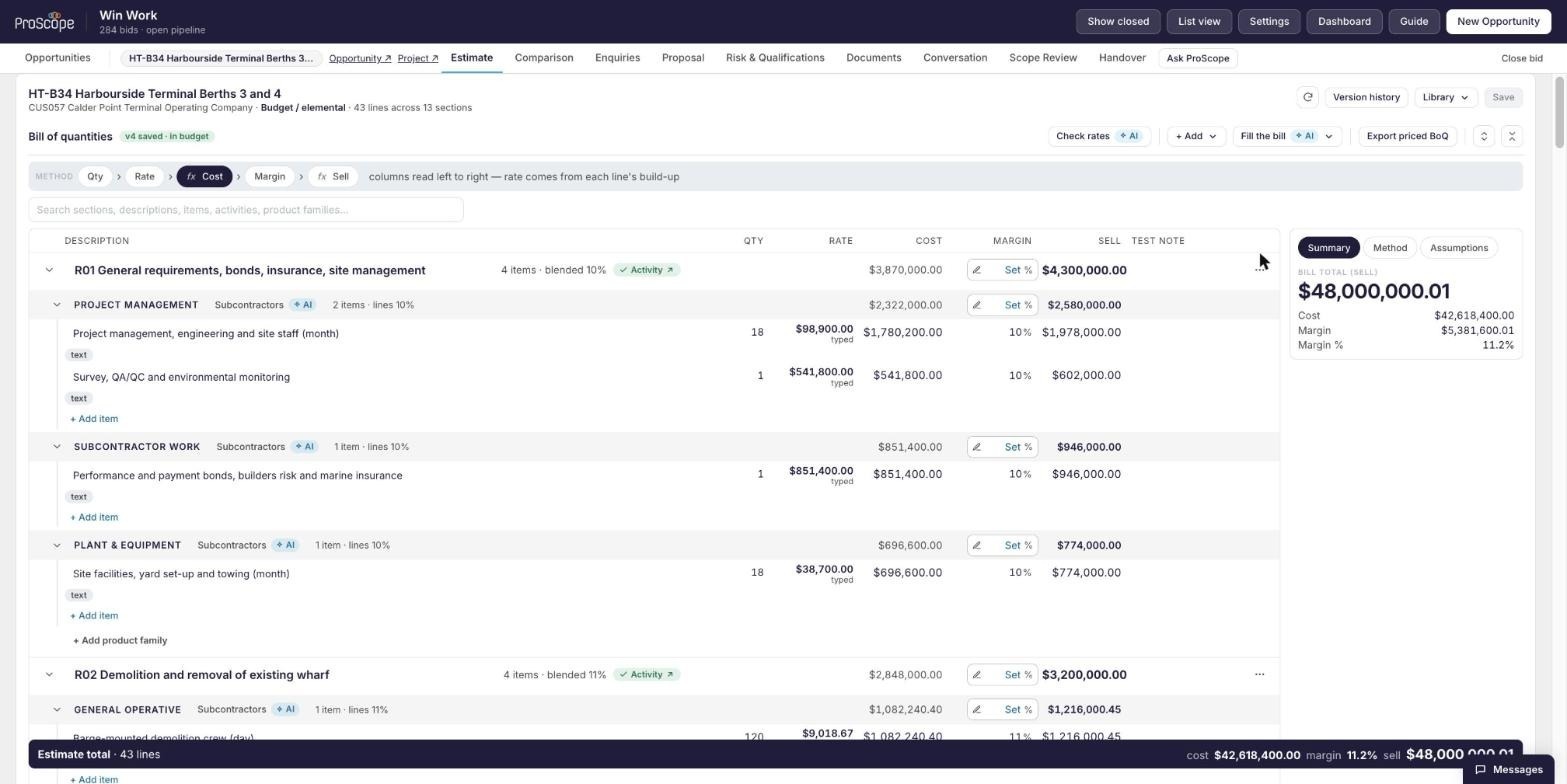
The Win Work Workbench brings together opportunity management, development pipelines, estimating and commercial insight in a single workspace, helping teams assess:
- Grid availability
- Technical feasibility
- Resource capacity
- Commercial viability
- Long-term project returns
AI-enhanced estimating helps teams build more accurate bids using connected procurement data, supplier pricing, inventory availability and labor requirements. As projects progress from tender to award, approved budgets, timelines and commercial assumptions carry directly into delivery, creating a seamless transition between development, commercial and operational teams.
Source & Buy
Secure Critical Materials and Maintain Supply Chain Control
Reduce delays, manage commitments and ensure the right resources are available when projects need them.
Renewable energy developments rely on complex global supply chains, where long-lead components such as solar modules, battery systems, transformers, switchgear and turbines often determine project schedules.
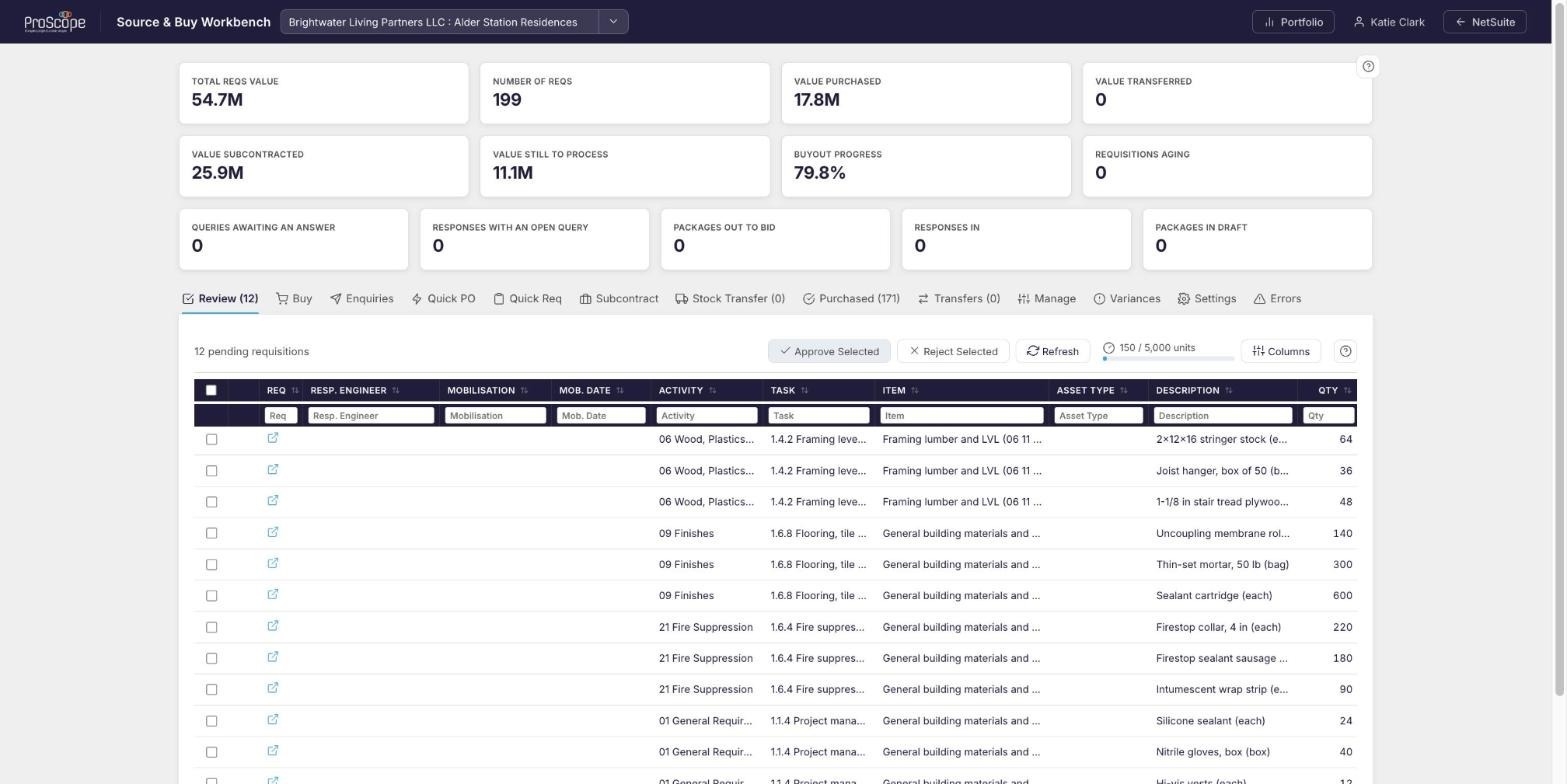
The Source & Buy Workbench connects procurement, inventory and supplier management directly to project schedules and budgets, helping teams maintain visibility across both delivery requirements and commercial commitments, providing visibility into:
- Supplier commitments
- Inventory availability
- Purchase orders
- Long-lead equipment
- Projected costs
Every procurement decision is connected back to the project, giving commercial and operational teams greater control over costs as work progresses.
Whether managing solar modules, battery systems, transformers, specialist contractors or equipment rentals, organizations can reduce supply chain risk, avoid unnecessary delays and ensure critical resources arrive in line with project milestones and commissioning schedules.
Manage & Control
Coordinate Resources, Contractors and Project Delivery in Real Time
Maintain complete visibility of project execution, resource utilization and commercial performance.
Renewable energy projects often involve multiple contractors, specialist engineers, commissioning teams and delivery partners working across multiple sites and project phases. Maintaining control requires complete visibility of resources, progress and project performance.
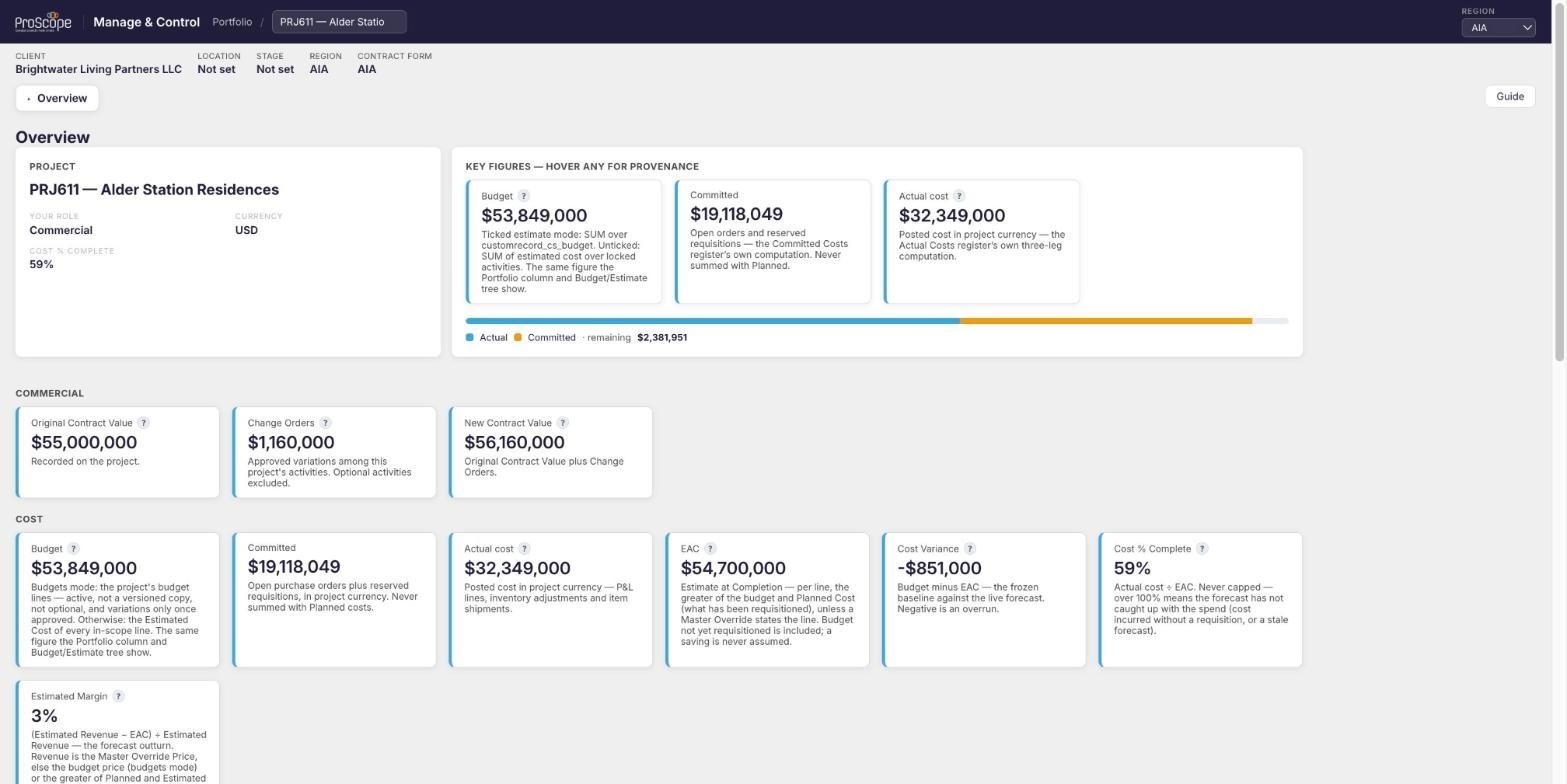
The Manage & Control Workbench combines project planning, resource scheduling, contractor management and operational oversight in a single connected environment. Teams can coordinate resources, monitor milestones and manage delivery activity while maintating visibility of workforce requirements and utilization across current and future projects.
Core capabilities include:
- Project Planning & Scheduling
- Resource Management
- Contractor Management
- Progress Tracking
- Change Management
- Cost-to-Complete Forecasting
As project activity, commitments, costs and progress data are captured, forecasts automatically update to provide visibility into project health, cost-to-complete and forecast final position. This enables organizations to identify potential issues earlier, optimize resource utilisation and maintain control of schedules, budgets and project outcomes throughout the delivery lifecycle.
Convert Project Progress into Predictable Cash Flow
Accelerate billing, improve accuracy and simplify payment processes across complex projects.
Renewable energy developments frequently involve multiple stakeholders, including developers, EPC contractors, investors, lenders, utilities and asset owners. Managing payment applications, milestone billings, supporting documentation and contractual obligations across these parties can be complex, time-consuming and prone to delays.
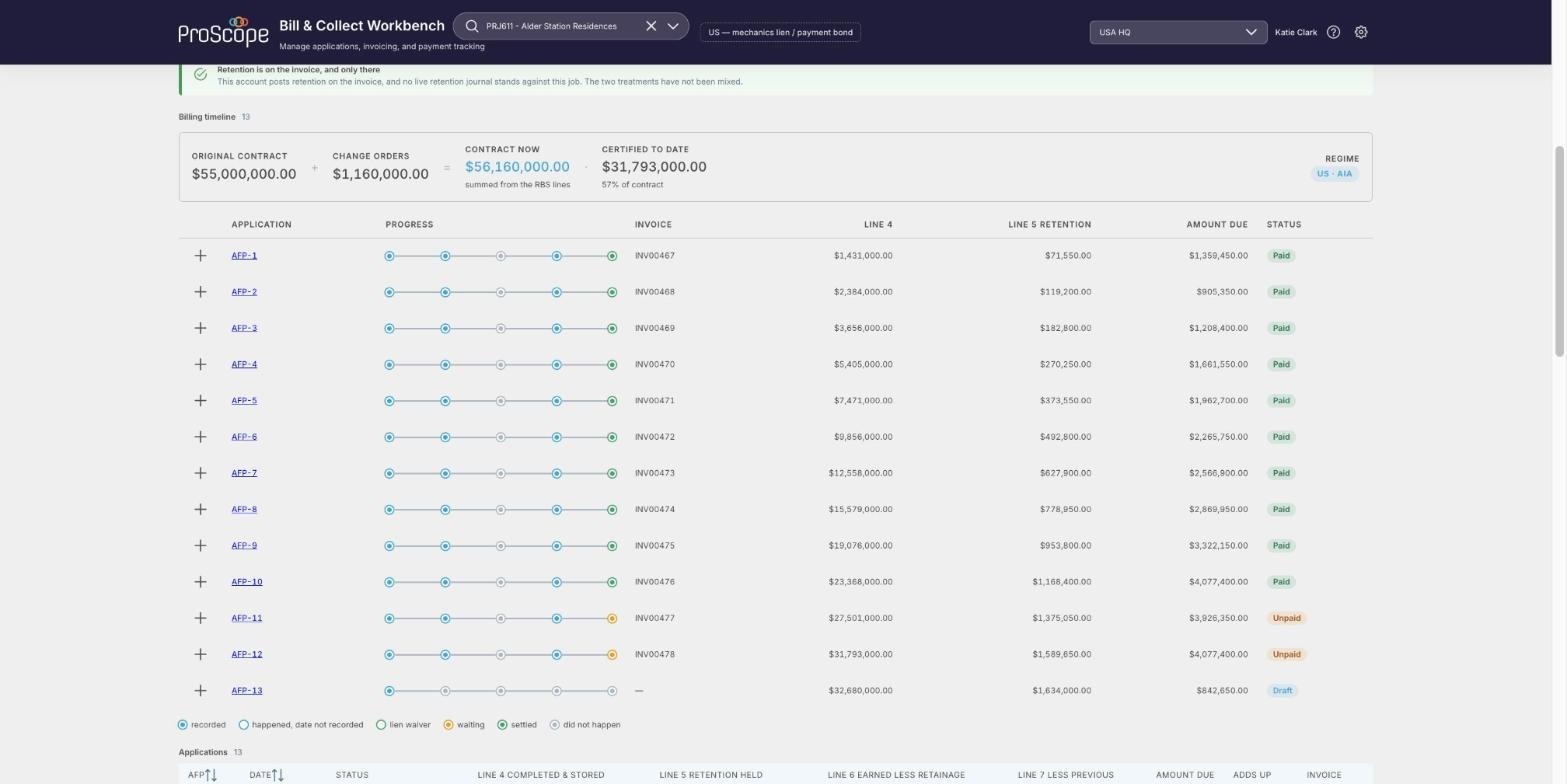
Extending NetSuite for Renewable Energy with industry-specific project billing and revenue management capabilities, ProScope connects project milestones directly to financial workflows, helping teams generate accurate billing information from live project performance.
Supporting:
- Progress Applications
- Milestone Billing
- Retentions Management
- Variation Billing
- Revenue Recognition
- Collections Management
By eliminating manual reconciliation between operational and financial teams, organisations can improve billing accuracy, shorten payment cycles and accelerate cash collection across the project portfolio.
Steer the Business
Protect Margins and Gain Complete Portfolio Visibility
Understand project performance, manage change proactively and make better business decisions with confidence.
No renewable energy project follows the original plan perfectly. Grid connection requirements, permitting conditions, weather impacts, contractor performance, ground conditions and equipment lead times can all influence project costs, schedules and profitability. Understanding the commercial impact of these changes as they occur is critical to protecting margins.
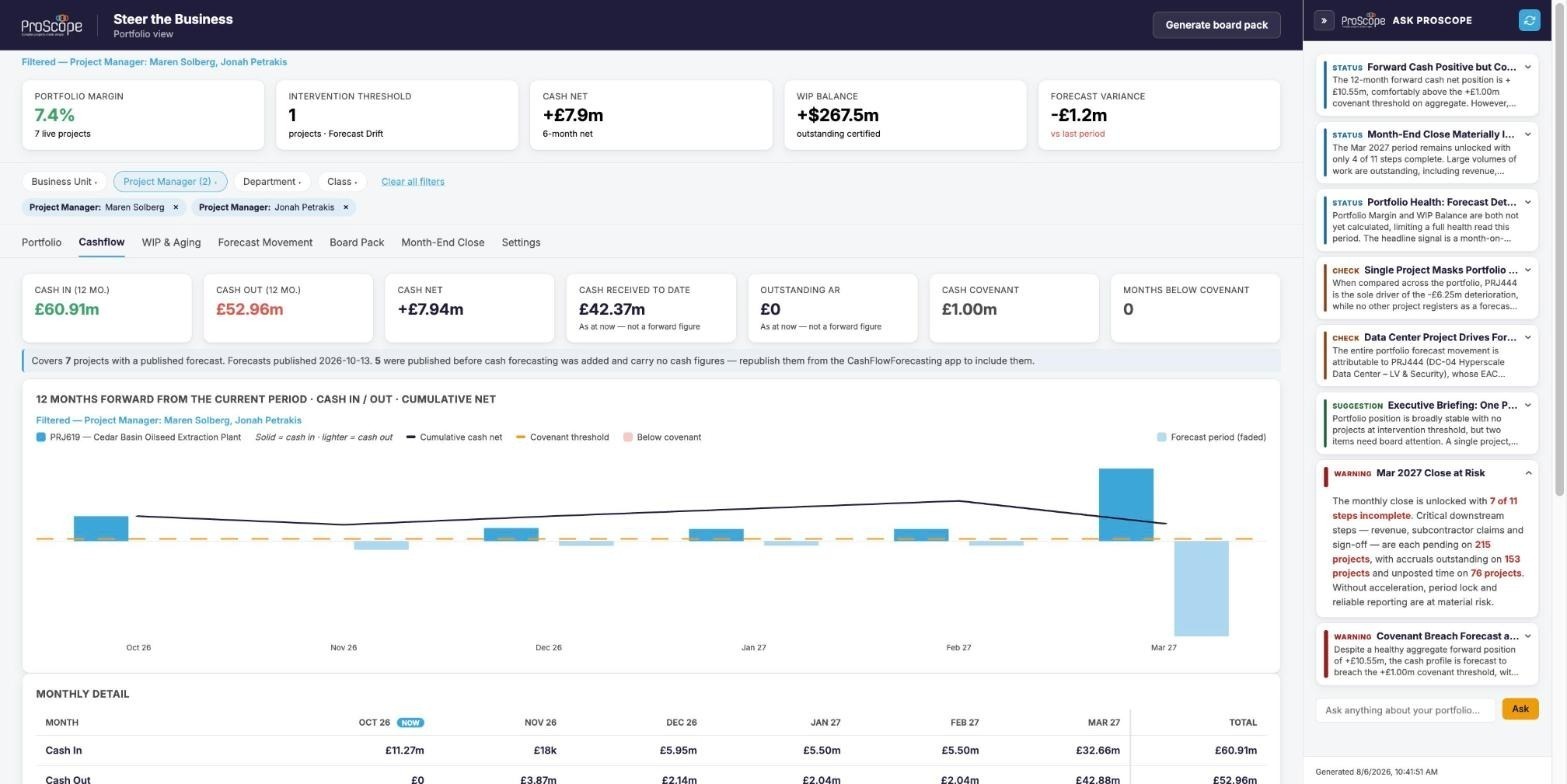
The Steer the Business Workbench combines project performance, commercial controls and financial management in a highly visual executive workspace. Teams gain real-time visibility across:
- Portfolio Performance
- Revenue Forecasting
- Cash Flow Forecasting
- Cost-to-Complete Tracking
- Project Health
- Multi-Entity & SPV Reporting
As organizations scale their renewable energy portfolios ProScope combines operational project data with financial management to provide complete visibility of revenue recognition, work in progress (WIP), margins, cash position and portfolio performance.
From executive dashboards and board reporting through to investor and stakeholder reporting, leadership teams can identify risks earlier, understand forecast movements and make more informed decisions using a golden thread of information.
Frequently asked questions
How can renewable energy companies reduce their reliance on spreadsheets?
The most effective way to reduce spreadsheet dependency is to bring project development, CAPEX management, contractor oversight, asset delivery and financial management into a single platform. With NetSuite and ProScope, renewable energy organisations can eliminate manual reconciliation, improve reporting accuracy and gain real-time visibility across projects, assets and portfolios.
Is NetSuite a good ERP for renewable energy companies?
Yes. NetSuite is particularly well suited to renewable energy businesses because its multi-subsidiary and intercompany capabilities support complex ownership structures, project portfolios, holding companies and SPVs. ProScope extends NetSuite with renewable energy-specific functionality for project development, CAPEX control, contractor management and asset delivery, creating a single platform for managing both operational and financial performance.
Does NetSuite need add-ons to support renewable energy operations?
Yes, for most renewable energy companies, additional industry-specific functionality is needed. While NetSuite provides a strong ERP foundation, organisations often require capabilities for project development, CAPEX management, contractor oversight, asset delivery and portfolio management.
ProScope extends NetSuite with these renewable energy-specific capabilities while maintaining a single source of truth across project, operational and financial data. This enables businesses to manage the full asset lifecycle within one platform, from development and construction through to ongoing operations.
How quickly can a renewables company go live with NetSuite?
Many renewables companies can go live with NetSuite in as little as 4-6 months, with more complex deployments typically taking 6-12 months, depending on scope, operational complexity, data quality and business requirements. By implementing ProScope natively within NetSuite, contractors can manage financials, project accounting and operations within a single platform, reducing integration complexity and accelerating time-to-value compared to deploying and connecting multiple systems.
Can the system be implemented modularly?
Yes. NetSuite and ProScope can be implemented in phases, allowing renewables companies to prioritise the capabilities that deliver the greatest immediate value. Many organisations start with financials and billing, procurement, project controls, estimating, and subcontractor management, before adding additional users and modules to tackle specific functions and projects once the core system is established. This shortens to time to go-live whilst normally increasing system adoption.